Every breakthrough in feline cancer research, explained for the people who love cats.
The science of feline cancer — translated for humans.
We read the journals, the trial registries, and the conference abstracts so you don't have to — then we translate them into plain English.
Secure signup on Beehiiv. No spam. Unsubscribe anytime. Free forever.
A research desk for the most common questions a cat parent never expected to ask.
Cat Cancer News is a free, independent publication. We follow feline oncology so closely that you can follow it in five minutes a week — without a veterinary degree and without the jargon.
We monitor everything, constantly
Peer-reviewed journals, clinical trial registries, veterinary conferences, and industry announcements — checked every 48 hours so nothing slips past.
We translate the science
Every story runs through a four-layer explainer: the headline, the science, what it means for your cat, and the deeper cut for readers who want the primary source.
We stay free and independent
No sponsorships from pharmaceutical companies or product vendors. No paywall. Just fast, sourced reporting for people making hard decisions.
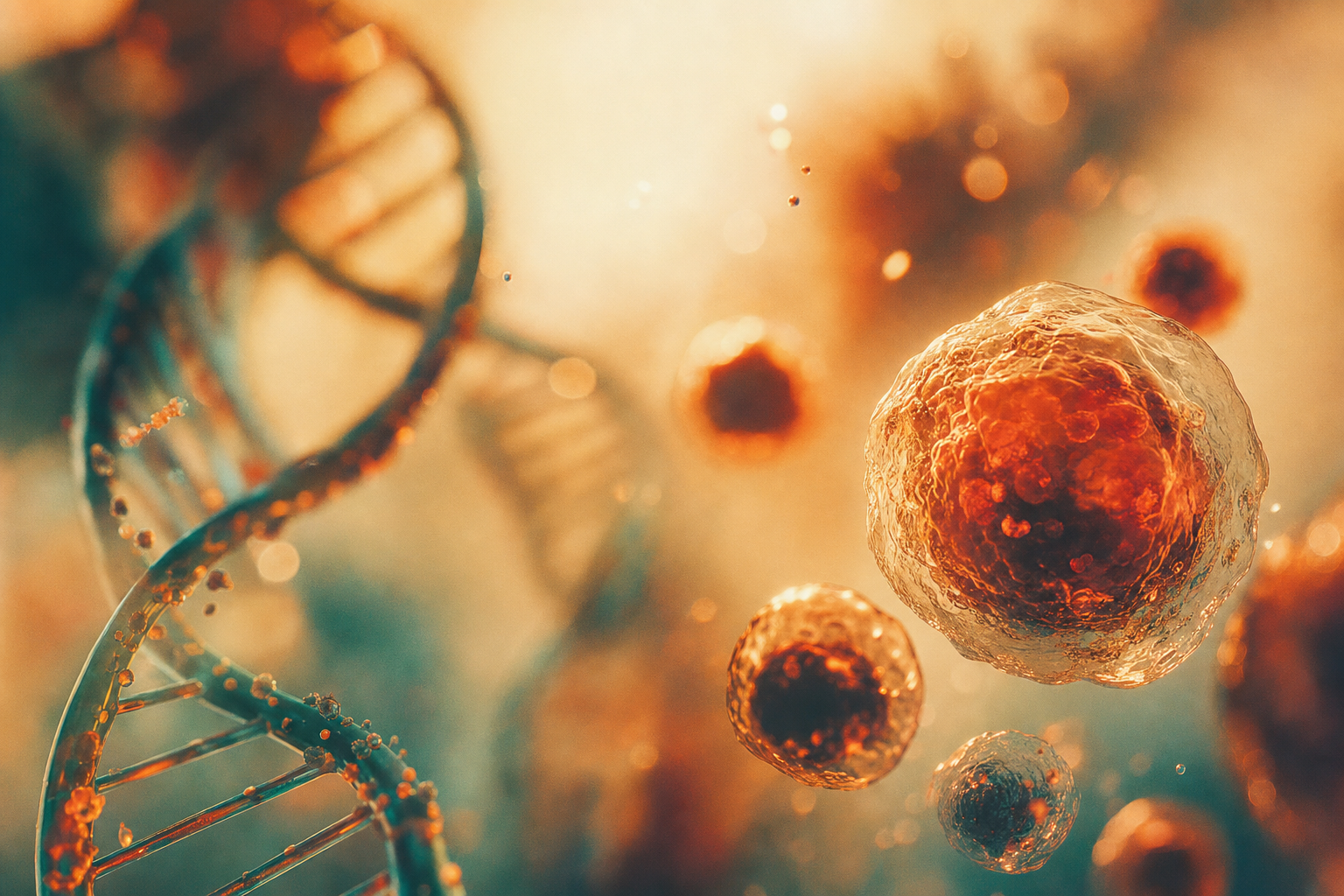
Cornell is building a "universal" cancer therapy for cats — one treatment that could work for many patients.
Researchers at Cornell are engineering an off-the-shelf CAR-T cancer therapy for cats with lymphoma — a single approach designed to treat many patients, rather than a costly custom build for each one.
Read and share the full briefing →
CAR-T therapy works by taking immune cells (T-cells) and re-programming them to hunt cancer — like giving the immune system a GPS locked onto tumor cells. It has revolutionized human blood-cancer treatment, but until now each dose had to be custom-manufactured for each patient from their own cells — a process so slow and expensive it has been out of reach for veterinary medicine.
Cornell's team is building an "off-the-shelf" version by targeting feline CD3 (a protein found on T-cells) and using artificial thymic organoids — essentially a lab-grown factory that continuously produces feline T-cells. If it works, any cat with lymphoma could be treated without the wait or the cost of a custom build.
- Is this available now? No. This is a research project funded through June 2027.
- How far off is it? Realistically 3–5 years to a treatable option, if the research succeeds.
- Who would it help? Cats with lymphoma — the most common feline cancer, affecting an estimated 200,000+ cats per year in the US alone.
- What should I do today? If your cat has lymphoma now, ask your oncologist about the Volition LSA diagnostic trial (Metropolitan Vet, Ohio) or the NC State oral SCC trial — both listed in Trials Recruiting Now below.
A single, ready-made treatment could remove the two biggest barriers to feline CAR-T: the wait and the cost.
Read the primary source: Cornell College of Veterinary Medicine project page. Project period: July 2026 – June 2027.
What else moved this month
A new palliative option for tongue cancer
Electrochemotherapy shrinks aggressive oral squamous cell carcinoma tumors while preserving quality of life.
A STAT3-targeting drug enters human-and-cat testing
A cyclic oligonucleotide (CS3D) shows promise in a phase 1 trial for feline head & neck squamous cell carcinoma.
AI tells lymphoma from IBD with 95.6% accuracy
A decision-support tool distinguishes feline low-grade GI lymphoma from inflammatory bowel disease at the case level.
A next-generation feline leukemia vaccine clears a key hurdle
The European Medicines Agency issues a positive opinion for Nobivac NXT FeLV, built on RNA-particle technology.
A new grant maps GI lymphoma gene by gene
Morris Animal Foundation funds spatial gene-activity mapping of feline intestinal lymphoma at the University of Florida.
~500 tumors reveal cancer genes shared across species
A landmark Science paper maps common cancer driver genes across cats, dogs, and humans.
Four layers. Read as deep as you need to.
Not every reader needs the molecular detail, and not every reader wants only the headline. So every briefing is built in layers — start at the top and stop wherever you have what you came for.
The Headline
The single most important thing that happened, in one plain sentence.
The Science, Explained
How it actually works — analogies over acronyms, no prior biology required.
What It Means For Your Cat
Is it available? How far off? Who does it help? What can you do today?
The Deeper Cut
Links to the primary source — the journal paper, the registry, the grant.
"We translate the science into plain English — then we show our work."
Active feline cancer trials you can ask about
These studies are enrolling patients as of this briefing. Talk to your veterinary oncologist before inquiring — eligibility and locations vary.
The next breakthrough, in your inbox.
Join the readers following feline oncology without the jargon. One email when something real happens — sourced, explained, and free.
Secure signup. No spam. Unsubscribe anytime.